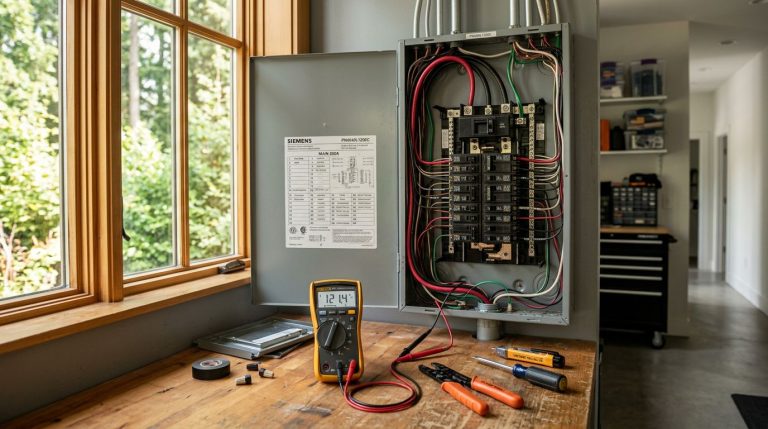
Professional Light Fixture Installation (Safety Guide & Tips)
Installing a new light fixture can transform a room in just a few minutes. But behind that simple upgrade lies live electrical wiring that deserves your full respect. At Sawyers Electric in McKinney, we handle professional light fixture installation every day, and we know how quickly a small mistake can turn into a big problem.
This guide walks you through the safety basics, the tools you need, and the step-by-step process. We will also cover when it makes sense to call a pro and what mistakes to avoid. Let us help you make smart, safe choices for your home.
What Are the Electrical Safety Basics for Light Fixture Installation
Safety ALWAYS comes first when you work with electricity. Even a basic light fixture connects to household current that can shock or start a fire if handled wrong. Before you touch a single wire, you need to understand the fundamentals. These basics protect you, your home, and anyone who uses that fixture later.
Electricity does not give second chances. The rules below are not optional. They are the difference between a smooth project and a trip to the emergency room. Here are the core safety principles every homeowner should follow.
- Turn off the power at the breaker. Flipping the wall switch is NOT enough. Shut off the correct circuit at your electrical panel.
- Test before you touch. Use a non-contact voltage tester to confirm the wires are dead.
- Never work on live wires. If you cannot confirm the power is off, stop and get help.
- Match the fixture to the box. Heavy fixtures need boxes rated to hold their weight.
- Respect wire colors. Black is hot, white is neutral, and green or bare copper is ground.
- Keep your ladder stable. Falls cause more injuries than shocks during this kind of work.
- Never overload a circuit. Adding too many fixtures can trip breakers or overheat wires.
If your home has older wiring or you spot anything that looks damaged, do not push forward. Older systems sometimes lack a ground wire, which changes how you install a fixture. When in doubt, a licensed electrician can review your setup.
What Tools and Materials Do You Need to Install a Light Fixture
Having the right tools makes the job faster and safer. You do not need a truck full of gear, but a few key items are essential. Trying to shortcut with the wrong tool leads to stripped screws, loose connections, and frustration. Gather everything before you start so you are not climbing up and down the ladder.
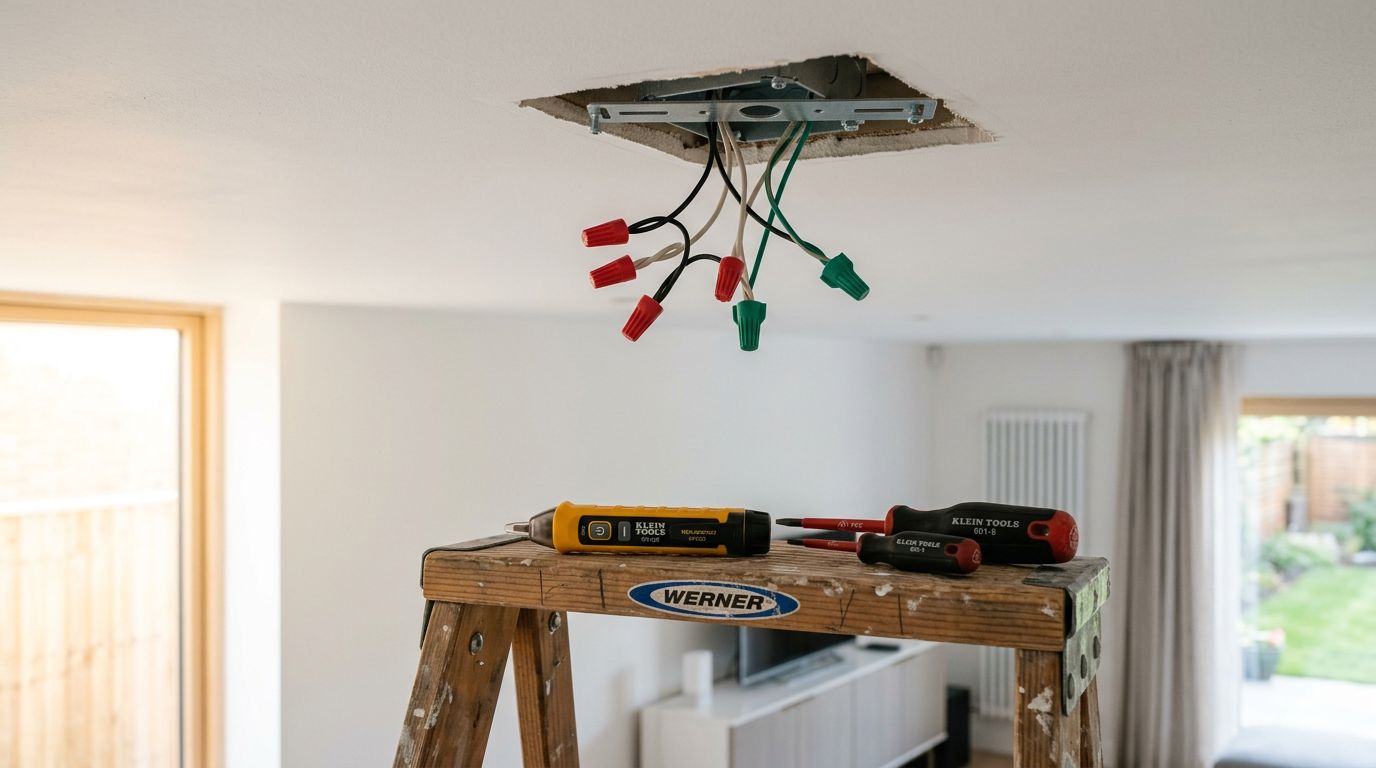
Most of these items are affordable and useful for other home projects too. If you plan to upgrade multiple fixtures, consider looking into the benefits of LED lighting installation for Texas homes before you buy. Here is the checklist we recommend.
- Non-contact voltage tester to confirm the power is off
- Screwdrivers in both flathead and Phillips styles
- Wire strippers for clean, safe wire ends
- Needle-nose pliers to bend and shape wires
- Wire connectors sized for your gauge of wire
- A sturdy ladder rated for your weight and the height
- Electrical tape to secure connections
- The new fixture with its mounting hardware and instructions
- A helper to hold the fixture while you connect wires
Read the manufacturer instructions that came with your fixture. Every model mounts a little differently. Some include a mounting bracket, while others use a center stud. Knowing this ahead of time saves you a lot of guesswork.
How to Safely Install a Light Fixture Step by Step
Once you have your tools ready and the power is off, the process is straightforward. Take your time and do not rush any step. Rushing is how mistakes happen. Follow this order to keep the work organized and safe from start to finish.
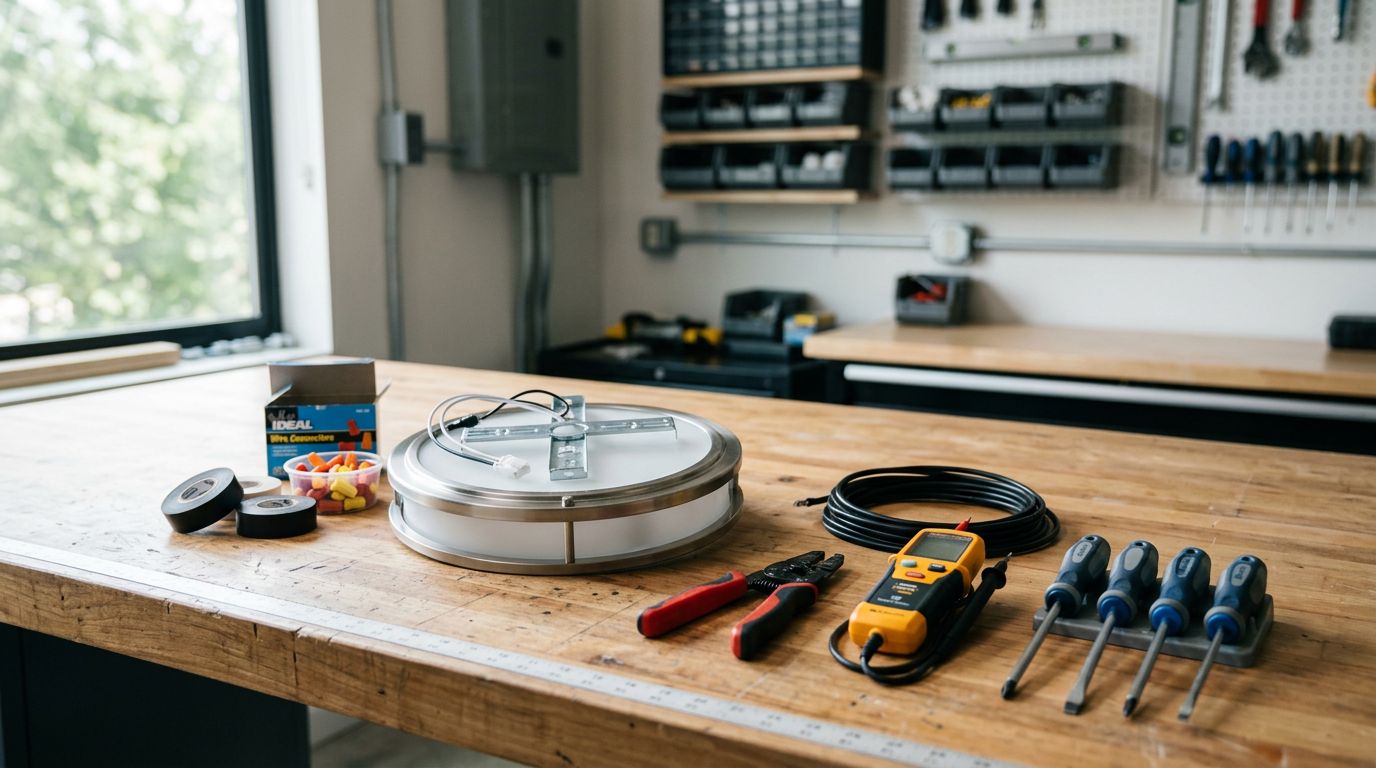
- Shut off the power. Go to your breaker panel and switch off the circuit for that room. Test the wires with your voltage tester to be sure.
- Remove the old fixture. Unscrew the mounting screws and gently lower it. Support the weight so it does not hang from the wires.
- Disconnect the wires. Twist off the wire connectors and separate the black, white, and ground wires.
- Inspect the electrical box. Check that it is secure and rated for the new fixture. Look for damage or corrosion.
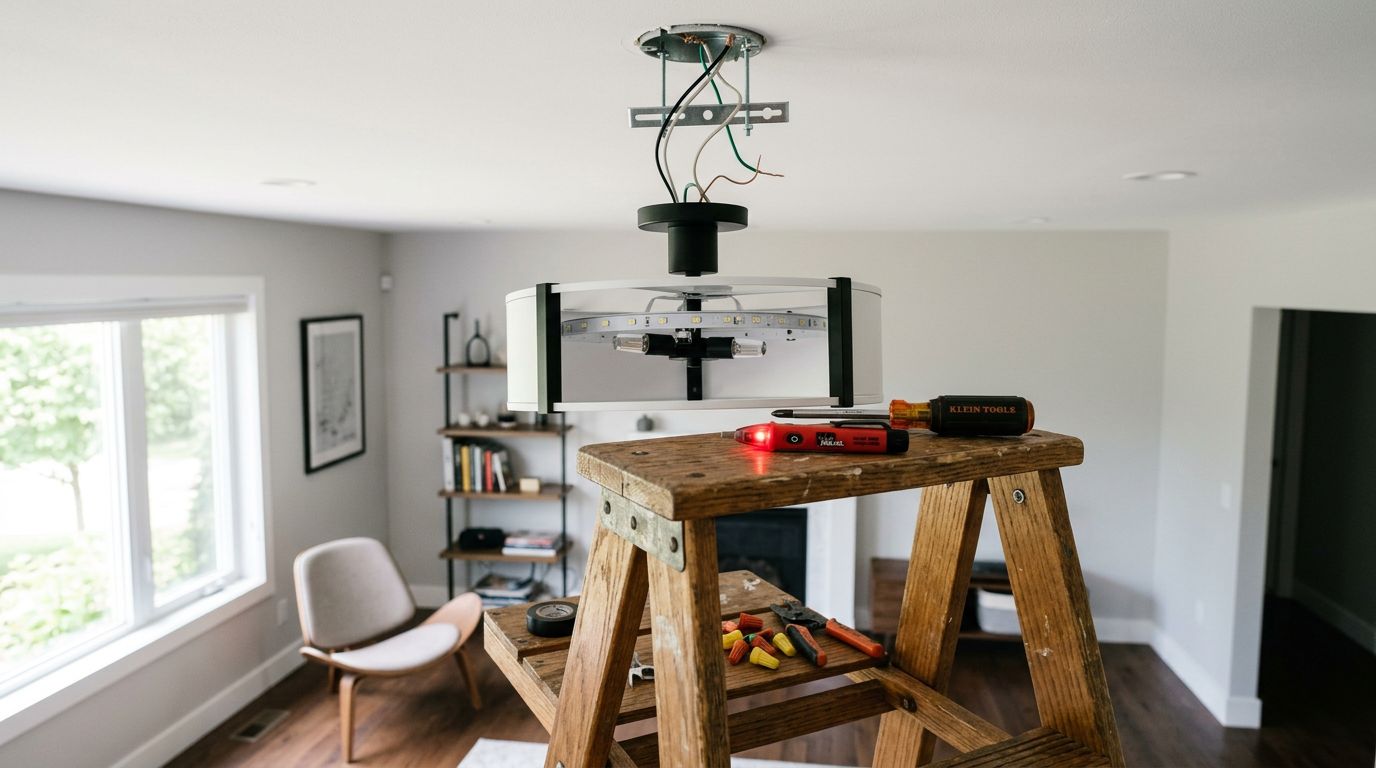
- Attach the mounting bracket. Most new fixtures come with a bracket that screws onto the box.
- Connect the wires. Match black to black, white to white, and ground to ground. Twist connectors on tight and give a gentle tug to confirm.
- Tuck the wires in. Fold the connected wires neatly into the box so nothing gets pinched.
- Mount the fixture. Secure it to the bracket with the provided screws. Keep it level.
- Add bulbs and covers. Install the correct wattage bulbs and attach any glass shades or covers.
- Restore power and test. Turn the breaker back on and flip the switch. If it lights up, you are done.
If the light does not turn on, shut the power off again and recheck your connections. A loose wire is the most common cause. Never leave a fixture partially connected and energized.
When Should You Hire a Professional Electrician for Light Fixture Installation
Some jobs are simple enough for a confident homeowner. Others call for a trained pro. Knowing the difference keeps you safe and protects your home. Here are the situations where hiring an electrician is the smart move.
Your Wiring Is Old or Damaged
Homes built decades ago often have outdated wiring. If you find cloth-covered wires, no ground wire, or scorched insulation, stop. These signs point to bigger issues that need a professional eye. Working around bad wiring is not worth the risk.
The Fixture Is Heavy or Complex
Large chandeliers and ceiling fans put stress on the electrical box. They need special support and sometimes extra bracing. A pro knows how to mount them so they stay put for years. This is one area where experience really matters.
You Need New Wiring or a New Box
Adding a fixture where none existed before means running new wire. That crosses into work that should be done by a licensed pro. There are real benefits to hiring a licensed electrician for jobs like this, from code compliance to lasting quality.
You Are Not Sure the Power Is Off
If you cannot confidently identify the right breaker or test the wires, do not guess. A single mistake with live current can be serious. Pros carry the right tools and training to handle it safely every time.
You Want It Done Fast and Right
Sometimes you just want the job handled without the hassle. Professional installers work quickly and clean up after themselves. For homeowners in the area, our team offers reliable lighting installation in Plano, TX and the surrounding communities.
How Much Does Professional Light Fixture Installation Cost
Cost is one of the first questions we hear, and it is a fair one. The price depends on several factors, so there is no single answer. A simple swap costs far less than installing a heavy chandelier on a new circuit. Understanding what drives the price helps you plan your budget.
Below are the main factors that affect what you pay. Every home is different, so the best way to get an accurate number is a direct quote based on your project.
- Type of fixture. A basic flush-mount light is cheaper than a large chandelier or ceiling fan.
- Height of the ceiling. Vaulted or high ceilings require special equipment and more time.
- Existing wiring. If the wiring is in good shape, the job goes faster and costs less.
- New wiring needs. Running new circuits or adding a box raises the total cost.
- Number of fixtures. Installing several at once often lowers the per-unit price.
- Removal of old fixtures. Taking down and disposing of the old unit may add a small fee.
Think of professional installation as an investment in safety and quality. A correctly installed fixture works reliably and lowers your risk of electrical problems down the road. That peace of mind is worth a lot.
What Common Light Fixture Installation Mistakes Should You Avoid
Even handy homeowners slip up when installing fixtures. Most mistakes come from rushing or skipping a safety step. The good news is that they are all easy to avoid once you know what to watch for. Learn from these common errors so your project goes smoothly.
We see the same issues over and over on repair calls. Many of these problems could have been prevented with a little extra care. Here are the ones to steer clear of.
- Leaving the power on. The most dangerous mistake of all. Always shut off the breaker and test the wires.
- Overloading the electrical box. Mounting a fixture too heavy for the box can cause it to fall.
- Loose wire connections. Connectors that are not tight lead to flickering lights and fire risk.
- Ignoring the ground wire. The ground protects you from shock. Never leave it disconnected.
- Using the wrong bulb wattage. Too much wattage can overheat the fixture and its wiring.
- Skipping the instructions. Every fixture mounts differently, so read the guide first.
- Not checking the box rating. Ceiling fans need boxes rated for movement and weight.
- Pinching wires behind the fixture. Crushed wires can short out over time.
If you notice any of these problems in your home already, do not ignore them. Flickering lights or a fixture that feels warm are warning signs. It is better to fix them early than to wait for a bigger issue.
Conclusion
Light fixture installation looks simple, but it involves real electrical risk. The keys are cutting the power, using the right tools, and following each step carefully. Know your limits and call a pro when the job involves heavy fixtures, old wiring, or new circuits. Avoiding the common mistakes above will keep your home safe and your lights shining.
At Sawyers Electric, we proudly serve McKinney, Frisco, Plano, Allen, Richardson, The Colony, Carrollton, Lewisville, and Garland. If you want your next fixture installed safely and correctly, reach out to our team and let us handle the hard part for you.