How To Choose Circuit Breaker Size (Safety Guide 2026)
Choosing the right circuit breaker size is one of the most important decisions you can make for your home’s electrical safety. Get it wrong and you risk overheated wires, tripped circuits, or worse, an electrical fire. At Sawyers Electric in McKinney, we help homeowners understand how to choose circuit breaker size correctly so their systems stay safe and reliable.
This guide walks you through everything you need to know in 2026. We break down the math, the wire matching, and the common mistakes that trip people up. Let’s get into it.
What Is a Circuit Breaker and How Does It Work
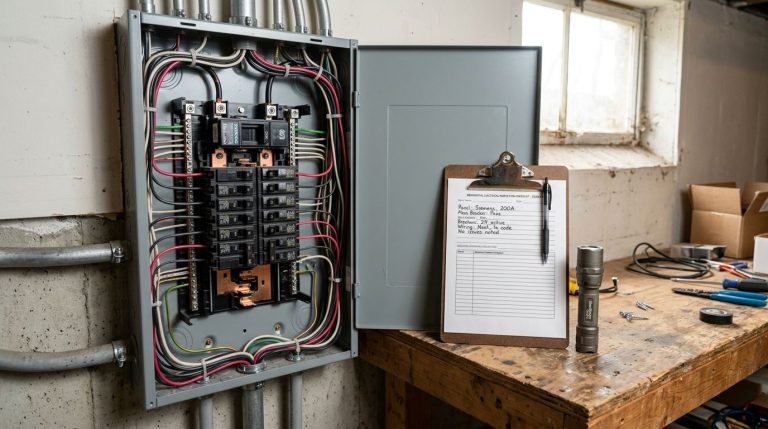
A circuit breaker is a safety device built into your electrical panel. Its job is simple but critical. It monitors the flow of electricity through a circuit and shuts things down automatically if too much current tries to pass through. This protects your wiring, your appliances, and your home from damage.
When a circuit draws more current than it can safely handle, the breaker “trips” and cuts the power. Think of it as a gatekeeper that never sleeps. Unlike a fuse, which burns out and must be replaced, a breaker can be reset and reused once the problem is fixed.
- Detects overloads: It senses when too many devices pull power at once.
- Detects short circuits: It reacts fast when wires touch or fault out.
- Protects wiring: It keeps wires from overheating past their safe limit.
- Resets easily: You flip it back on once the issue is resolved.
- Comes in various amp ratings: Common sizes range from 15 amps to 200 amps.
A breaker that keeps tripping is often trying to tell you something. Sometimes it is an overloaded circuit. Other times it can point to a deeper problem. Knowing whether a faulty circuit breaker can cause electrical fires in Texas homes helps you take those warning signs seriously.
How to Calculate the Right Circuit Breaker Size
Sizing a breaker comes down to matching the amperage to the load and the wire. You never want a breaker rated higher than what the wire can carry. The goal is to protect the circuit, not just power it. Here is the basic process we follow when sizing a breaker for a circuit.
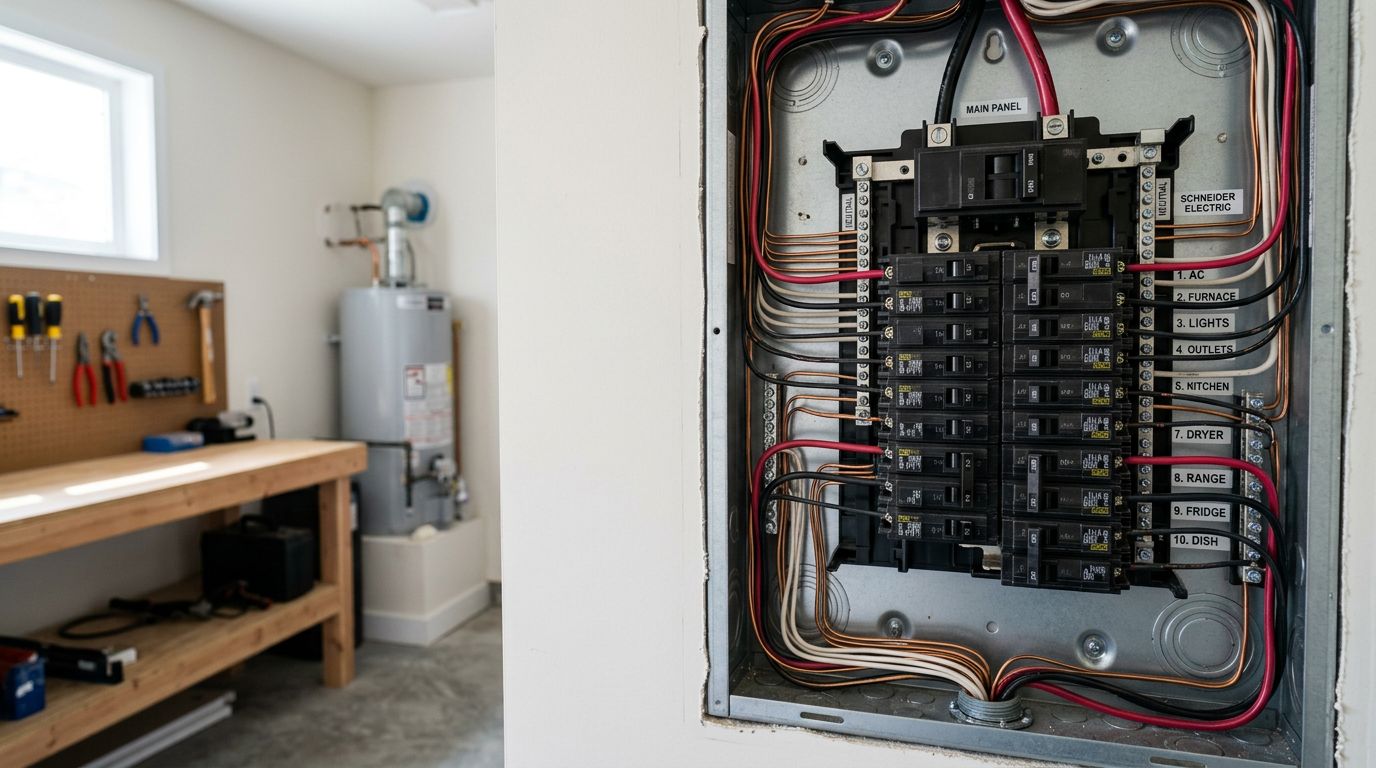
- Add up the total load. List every device and appliance on the circuit and note the wattage of each.
- Convert watts to amps. Divide total watts by the voltage. For most home circuits that is 120 volts. So 1,800 watts divided by 120 equals 15 amps.
- Apply the 80 percent rule. A circuit should only run at 80 percent of its rated capacity for continuous loads. So a 20 amp breaker should carry no more than 16 amps of steady load.
- Round up to a standard breaker size. Breakers come in fixed sizes like 15, 20, 30, and 40 amps. Pick the next standard size that safely covers your load.
- Confirm the wire gauge matches. The wire must be rated to handle the breaker size. More on that below.
This math protects you from overloading. If you are unsure whether your existing setup is sized correctly or whether a circuit breaker can be repaired rather than replaced, it is worth having a professional take a look before you make changes.
Common Circuit Breaker Sizes and Their Applications
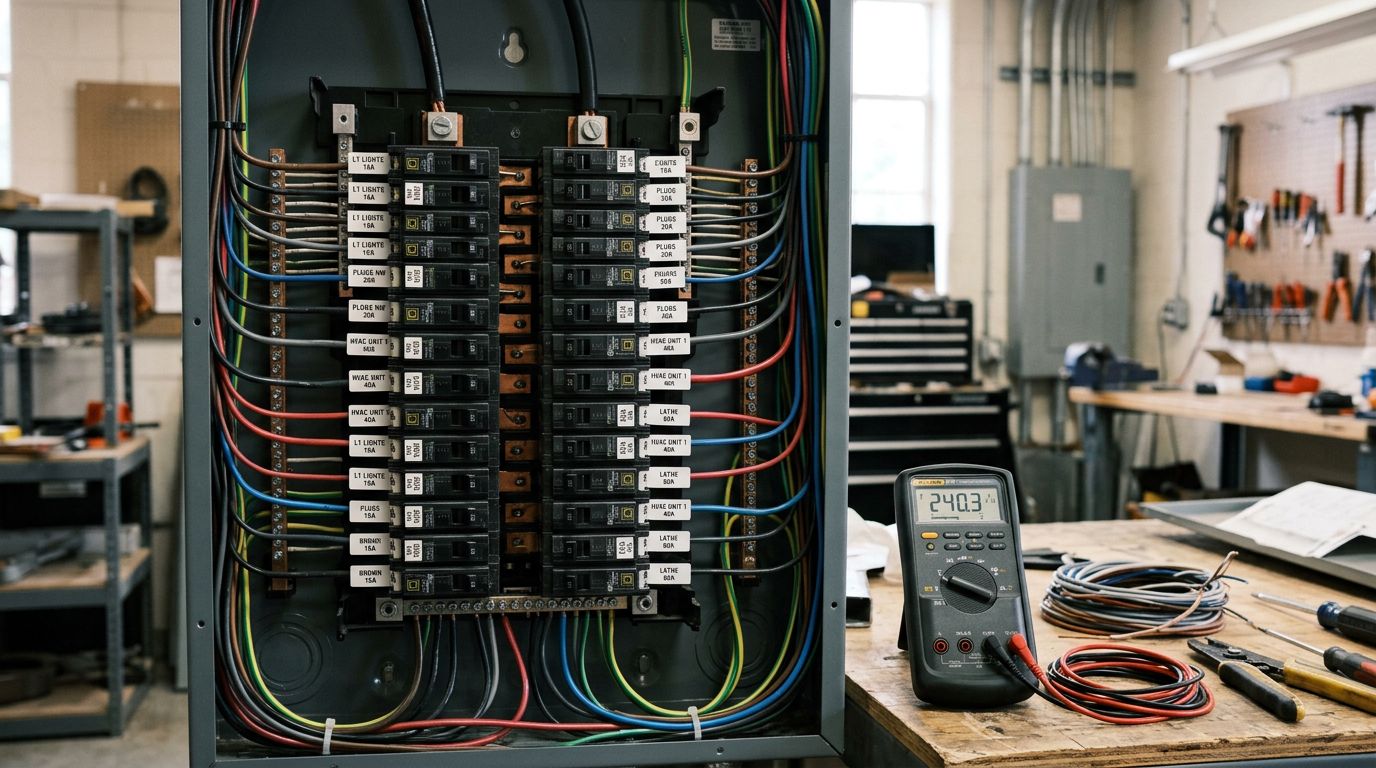
Different parts of your home need different breaker sizes. A bedroom lighting circuit has very different needs than an electric range or an HVAC system. Below is a quick reference table showing common breaker sizes and where they typically get used in a home.
| Breaker Size | Typical Wire Gauge | Common Applications |
|---|---|---|
| 15 amps | 14 gauge | Lighting circuits, general bedroom and living room outlets |
| 20 amps | 12 gauge | Kitchen counters, bathrooms, garage outlets, small appliances |
| 30 amps | 10 gauge | Electric dryers, water heaters, some window AC units |
| 40 amps | 8 gauge | Electric ranges, ovens, large cooktops |
| 50 amps | 6 gauge | Electric vehicle chargers, large ranges, sub panels |
| 60+ amps | 4 gauge and larger | HVAC systems, sub panels, heavy equipment |
These are general guidelines. Always check the nameplate on your appliance for its exact amperage requirement. If you notice breakers tripping on a specific appliance circuit, that is often a sign the sizing or wiring needs attention. Our team handles circuit breaker repair for homeowners across McKinney and the surrounding areas.
How to Match Breaker Size to Wire Gauge
This is where a lot of people go wrong. The breaker and the wire have to work as a team. The breaker protects the wire, so the wire must be thick enough to handle the current the breaker allows. If the breaker is too big for the wire, the wire can overheat BEFORE the breaker trips. That is a serious fire risk.
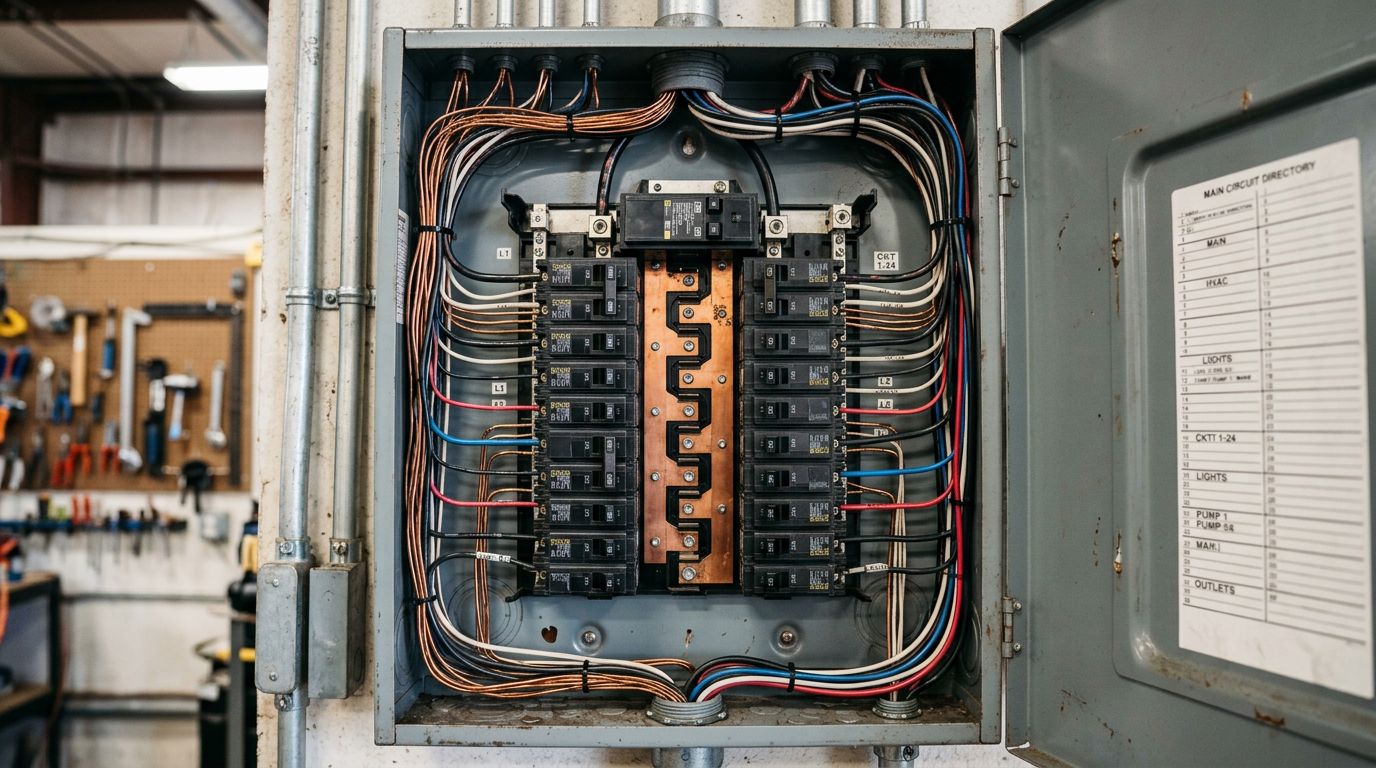
Wire gauge works in reverse. A SMALLER number means a THICKER wire. So 10 gauge wire is thicker and carries more current than 14 gauge wire. Here is how the common sizes pair up.
- 14 gauge wire pairs with a 15 amp breaker. Never put 14 gauge on a 20 amp breaker.
- 12 gauge wire pairs with a 20 amp breaker. This is the standard for kitchen and bathroom circuits.
- 10 gauge wire pairs with a 30 amp breaker. Common for dryers and water heaters.
- 8 gauge wire pairs with a 40 amp breaker. Used for many electric ranges.
- 6 gauge wire pairs with a 50 amp breaker. Used for EV chargers and larger loads.
The rule to remember is simple. You can use a breaker that is EQUAL to or SMALLER than the wire rating, but never larger. When in doubt, size the breaker to the wire. This one habit prevents most sizing disasters.
Factors That Affect Circuit Breaker Sizing
Sizing is not always a straight math problem. Several real world factors can change what breaker you need. Ignoring these can leave you with nuisance trips or an unsafe setup.
Continuous vs Non Continuous Loads
A continuous load runs for three hours or more. Lighting and HVAC often fall into this group. For these, you apply the 80 percent rule, meaning the breaker should be rated at least 125 percent of the continuous load. A short burst load, like a toaster, has more flexibility.
Ambient Temperature
Heat matters. Wires in a hot attic or an outdoor conduit carry less current safely than wires in a cool wall. In North Texas, our summers are brutal. Circuits in hot spaces may need to be derated, which can affect your breaker choice.
Wire Length and Voltage Drop
Long wire runs lose voltage along the way. This is called voltage drop. For long circuits you may need thicker wire to keep voltage stable, which then affects your breaker and wire pairing.
Number of Devices on the Circuit
The more devices you add, the more current the circuit draws. A circuit that was fine years ago may now be overloaded because you added appliances over time. This is a common cause of tripping breakers in older homes.
Motor and Startup Loads
Motors draw a big surge of current when they first start. Air conditioners, pumps, and power tools all do this. Breakers for these loads are sized to handle that inrush without tripping every time the motor kicks on.
Circuit Breaker Sizing Mistakes to Avoid
We have seen plenty of DIY sizing errors over the years. Some are minor. Others are downright dangerous. Here are the most common mistakes people make so you can steer clear of them.
- Oversizing the breaker to stop tripping. Swapping a 15 amp for a 20 amp to stop nuisance trips is one of the most dangerous shortcuts there is. It defeats the protection.
- Mismatching wire and breaker. Putting a large breaker on thin wire is a fire hazard. The wire can cook before the breaker ever reacts.
- Ignoring the 80 percent rule. Loading a circuit to its full rated capacity leaves no safety margin for continuous loads.
- Overlooking startup surges. Motor loads need breakers that account for the inrush current, or they trip constantly.
- Forgetting about future loads. If you plan to add an EV charger or new appliance, size the circuit with that in mind.
- Using the wrong breaker brand. Not every breaker fits every panel. Mixing incompatible brands can lead to loose connections and arcing.
- Skipping the professional. Guessing on breaker size to save money often costs far more in the long run.
If you are dealing with breakers that trip often, flickering lights, or an older panel, a professional inspection can catch these problems early. It is always cheaper to fix a sizing issue than to deal with the aftermath of an electrical fire.
Conclusion
Choosing the right circuit breaker size protects your home, your appliances, and your family. The key points are simple. Calculate your total load, apply the 80 percent rule, and always match the breaker to the wire gauge. Never oversize a breaker just to stop it from tripping, and keep future loads in mind when planning any circuit.
Electrical work leaves little room for guesswork. If you live in McKinney, Frisco, Plano, Allen, Richardson, The Colony, Carrollton, Lewisville, or Garland and want your breaker sizing done right, the team at Sawyers Electric is ready to help. Reach out to schedule an inspection and keep your home safe for years to come.