Double Tapped Circuit Breaker Danger (Safety & Fixes)
Have you ever opened your electrical panel and noticed two wires jammed under a single breaker screw? That setup has a name. It is called a double tapped circuit breaker, and it can be a bigger safety problem than most homeowners realize. At Sawyers Electric in McKinney, we see this issue all the time during home inspections and repair calls.
Sometimes a double tap is a harmless code allowance. Other times it is a fire waiting to happen. The tricky part is knowing the difference. In this guide, we will walk you through what a double tapped breaker is, why it can be dangerous, and how to fix it the RIGHT way.
What Is a Double Tapped Circuit Breaker?
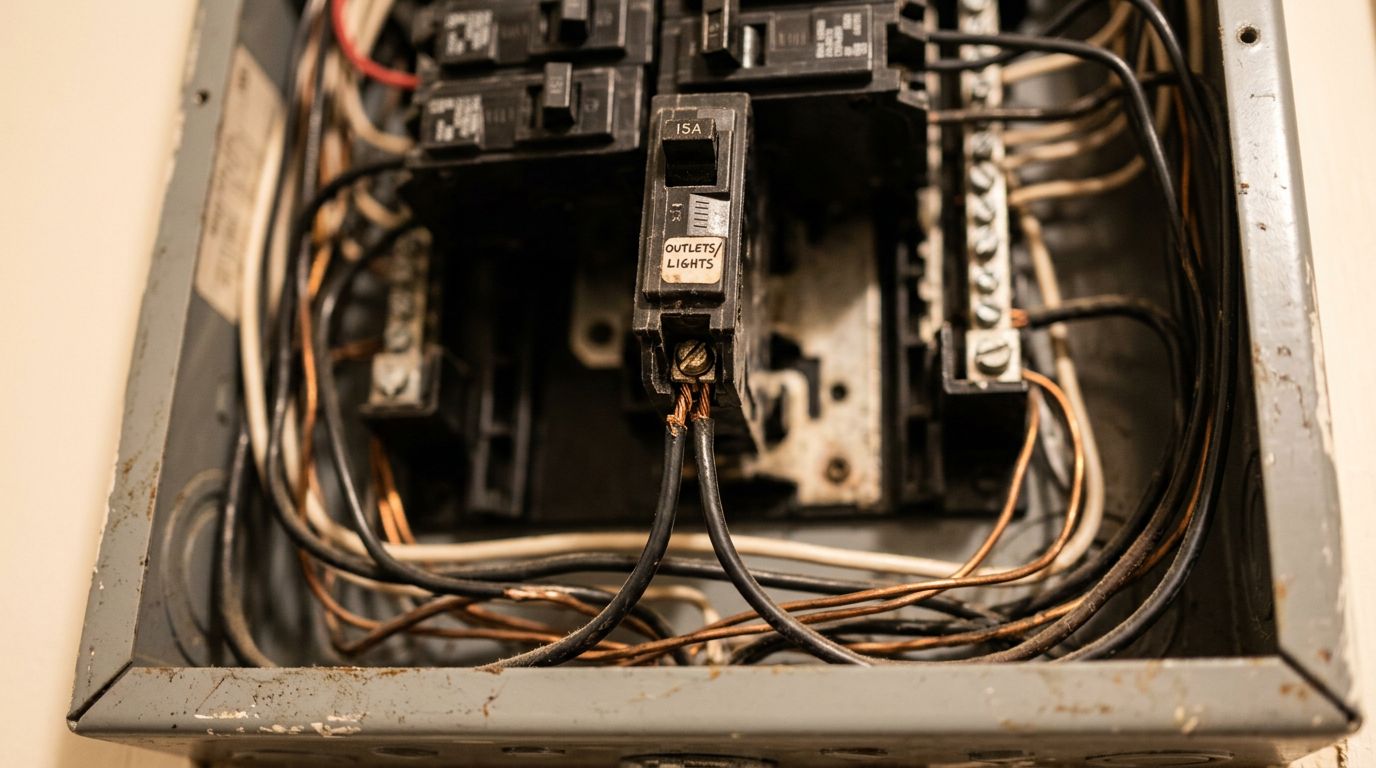
A double tapped circuit breaker is exactly what it sounds like. It happens when two electrical wires are connected to a single breaker terminal that was designed to hold only ONE wire. People also call this “double lugging” or “double tapping.” It usually shows up when someone adds a new circuit and takes the shortcut of piggybacking onto an existing breaker instead of installing a new one.
Most standard circuit breakers are built to hold just one conductor. When you force a second wire in, the connection becomes loose and unreliable. That is where the trouble starts. Here are the key things to know about double tapped breakers:
- It involves TWO wires under one breaker screw or lug.
- Most breakers are not rated to hold more than one wire.
- It is often the result of DIY work or a rushed installation.
- It can create loose connections, arcing, and heat.
- It is one of the most common issues flagged in home inspections.
- A small number of breakers ARE designed to accept two wires.
Why Are Double Tapped Breakers Dangerous?
Not every double tap will burn your house down, but the risk is real. The danger comes from the connection itself. When two wires share a terminal built for one, the clamping pressure gets divided unevenly. Let us break down the specific hazards.
Loose Connections
A single terminal cannot grip two wires evenly. One wire ends up snug while the other stays loose. That loose wire can wiggle free over time, especially as the metal expands and contracts with heat. Loose connections are one of the leading causes of electrical failures in homes.
Arcing and Sparks
When a wire is loose, electricity has to jump the tiny gap to keep flowing. This is called ARCING. Arcing produces intense heat and sparks. It can happen behind your panel cover where you would never see it until it is too late.
Fire Risk
Heat plus flammable materials equals fire. Arcing and overheating at a double tapped terminal can ignite the wire insulation or nearby dust. Electrical fires that start inside panels are especially dangerous because they can spread before anyone notices.
Overloaded Circuits
Sometimes a double tap means two circuits are pulling power through one breaker. If that breaker is not sized for the combined load, it may not trip when it should. That defeats the whole purpose of the breaker, which is to protect your wiring from overheating.
Failed Home Inspections
If you plan to sell your home, a double tapped breaker will almost always get flagged. Buyers and inspectors take this seriously. It can delay closing or force last minute repairs. Fixing it before you list saves stress later.
How to Identify a Double Tapped Circuit Breaker
Spotting a double tapped breaker is not hard if you know what to look for. That said, we always recommend caution. Opening an electrical panel carries real risk. If you are not comfortable, leave the inspection to a pro. If you do take a look, follow these steps carefully.
- Turn off the main breaker before doing anything to reduce shock risk.
- Remove the panel cover screws and set the cover aside gently.
- Look at each breaker terminal where the wires connect.
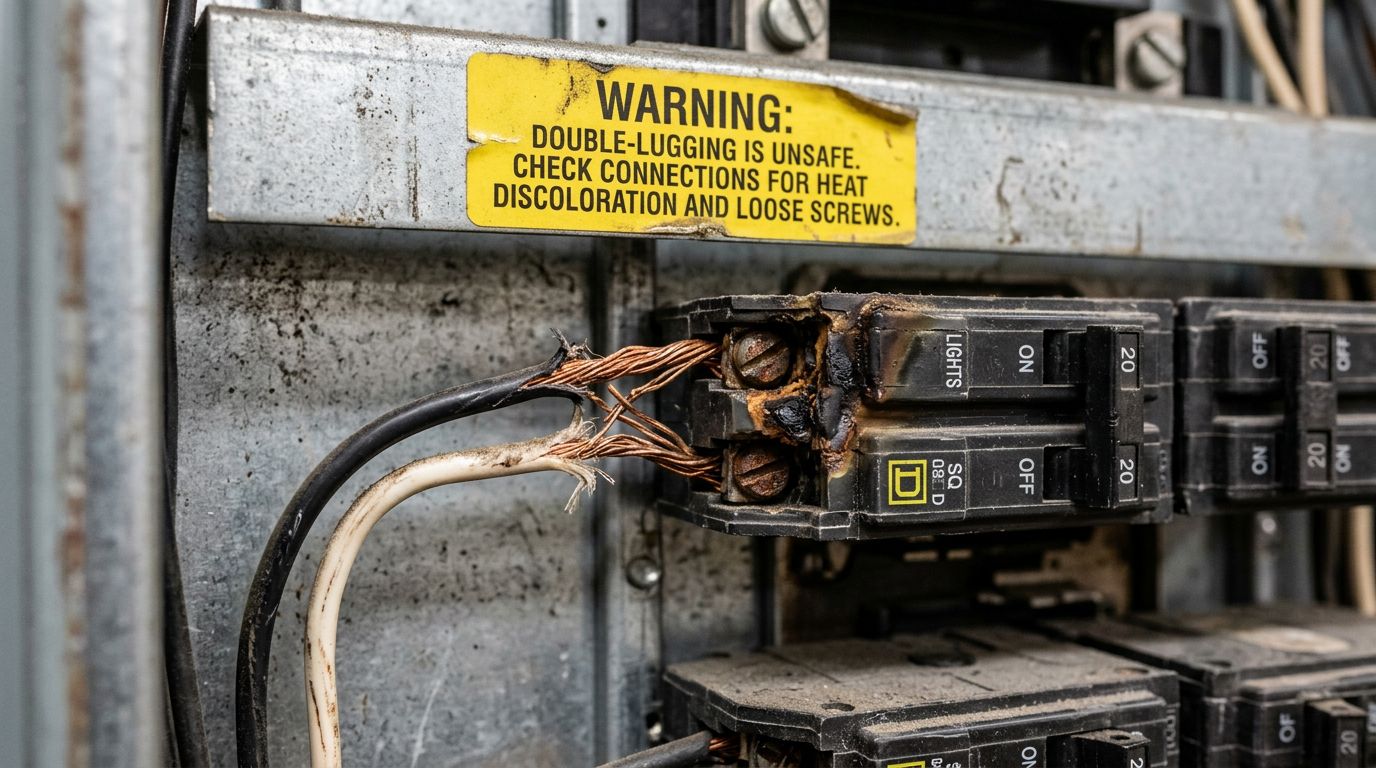
- Check for any terminal that has TWO wires under one screw.
- Note whether the wires are the same gauge or different sizes.
- Look for signs of heat damage like darkened or melted insulation.
- Take a photo so you can show it to a licensed electrician.
- Replace the cover and keep your hands away from live parts.
If you see burn marks, a burning smell, or discolored wires, do not wait. Those are warning signs that need immediate attention from a qualified electrician.
Are Double Tapped Breakers Ever Allowed by Code?
Here is where it gets interesting. Not every double tap is a code violation. Some breakers are actually DESIGNED to hold two wires. The manufacturer builds a special terminal that grips both conductors evenly and safely. The key is whether the breaker is rated for it.
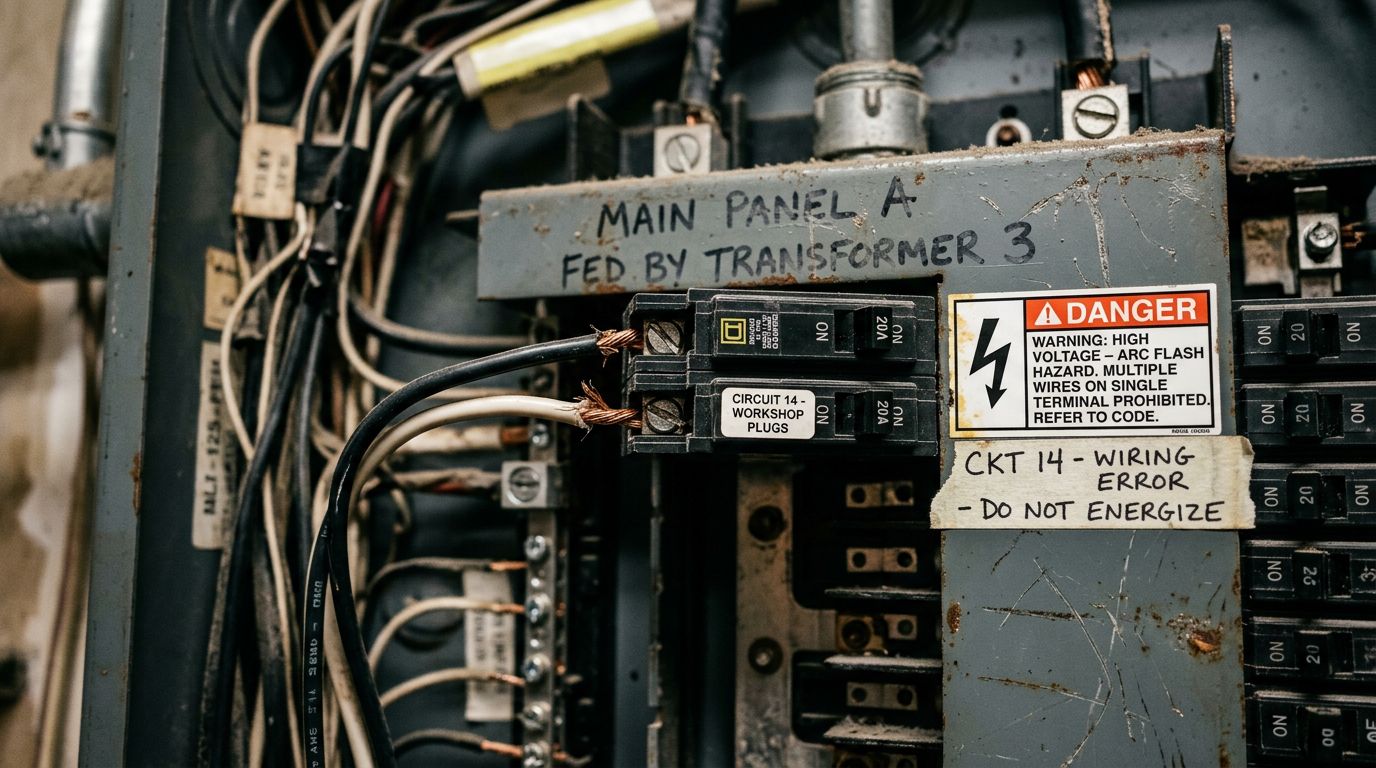
You cannot just eyeball this. The breaker will usually have markings or the manufacturer will list it in their documentation. When in doubt, assume it is NOT allowed until proven otherwise. Here are the general rules around when a double tap may be acceptable:
- The breaker must be specifically listed and rated for two conductors.
- Certain Square D and Cutler-Hammer breakers allow two wires by design.
- Both wires usually need to be the same gauge and type.
- The terminal must clamp both wires with equal, secure pressure.
- The installation must match the manufacturer’s instructions exactly.
- If the breaker is not rated for two wires, it is a VIOLATION, period.
The bottom line is simple. Most residential breakers are single wire only. A double tap on those is not up to code and needs to be corrected.
How to Fix a Double Tapped Circuit Breaker
Fixing a double tapped breaker is not something we recommend as a weekend DIY project. Panel work involves live electricity and precise techniques. Still, it helps to understand what the repair actually involves. A licensed electrician typically follows a process like this.
- Shut off the main power to the panel for safety.
- Identify which two wires are sharing the single terminal.
- Determine whether each wire needs its own dedicated circuit.
- Install a NEW breaker so one of the wires gets its own home.
- Or use a pigtail: join the two wires to a single wire that then connects to the breaker.
- Or replace the breaker with one that is rated for two conductors, if appropriate.
- Torque the terminal screws to the manufacturer’s spec.
- Verify there is space and capacity in the panel for any added breaker.
- Restore power and test the circuits to confirm everything works.
The right fix depends on your panel, your load, and local code. Sometimes there is open space for a new breaker. Other times the panel is full and needs a subpanel or an upgrade. A professional will figure out the safest, most code compliant solution for your home.
When to Call a Licensed Electrician
We get it. Some homeowners love tackling projects. But electrical panels are one area where the stakes are just too high. A small mistake can cause a shock, a fire, or a failed inspection. Here is when you should absolutely bring in a licensed electrician.
- You found a double tapped breaker and are not sure if it is code compliant.
- You see burn marks, melted insulation, or smell something burning.
- Your breakers trip often for no clear reason.
- You are buying or selling a home and need a proper inspection.
- Your panel is full and you need more circuits.
- You are not 100 percent comfortable working inside a live panel.
- You want peace of mind that your electrical system is SAFE.
At Sawyers Electric, we handle circuit breaker repair, outlet repair, light fixture repair, and full home electrical inspections across McKinney, Frisco, Plano, Allen, Richardson, The Colony, Carrollton, Lewisville, and Garland. We know local codes and we fix double taps the right way the first time.
Conclusion
A double tapped circuit breaker might look like a small thing, but it can lead to loose connections, arcing, and even fire. Most standard breakers are built for ONE wire only, so a double tap is usually a code violation that needs correcting. A few special breakers do allow two wires, but you should never assume yours is one of them.
The safest move is to have a licensed electrician inspect your panel and make any needed repairs. If you have spotted a double tapped breaker or you just want peace of mind about your home’s wiring, reach out to Sawyers Electric today and let us keep your home safe and up to code.