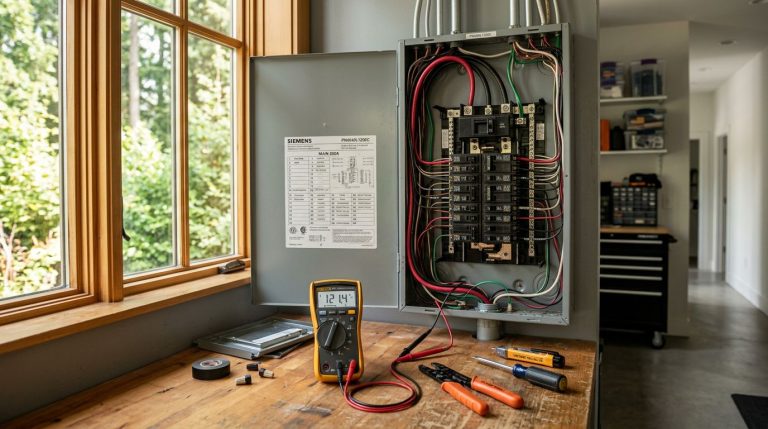
Outlet Repair Reasons Why Outlets Fail (Fixes & Safety Tips)
Electrical outlets are some of the most used parts of your home, yet most people never think about them until one stops working. When an outlet fails, it can be a minor annoyance or a serious safety concern. At Sawyers Electric in McKinney, we handle outlet repair every day, and we know how frustrating it is when a plug goes dead or sparks when you use it. Understanding WHY outlets fail can help you catch problems early.
In this guide, we will walk you through the common reasons outlets stop working, how to tell if you need a repair or replacement, and simple safety tips to keep your home protected. Let us dig in.
Common Reasons Why Electrical Outlets Fail
Outlets do not last forever. Years of plugging and unplugging, heat buildup, and general wear take a toll. Some failures are simple to fix, while others point to bigger wiring issues hiding behind the wall. Knowing the usual suspects helps you understand what might be going on. If you notice several outlets acting up at once, that could be one of the common signs of electrical problems in a Texas home that deserve a closer look.
- Worn out contacts. The metal parts inside an outlet loosen over time. Loose contacts cannot hold a plug firmly, which leads to a poor connection.
- Loose wiring. Wires behind the outlet can come loose from their screws. This causes flickering power and can create heat.
- Overloaded circuits. Plugging in too many high-power devices can overwhelm the outlet and trip the breaker.
- Tripped GFCI outlets. Bathroom and kitchen outlets often have a reset button. A tripped GFCI kills power until you reset it.
- Age and corrosion. Older outlets simply wear out. Corrosion on the terminals can block current flow.
- Water damage. Moisture near an outlet can cause shorts and rust.
- Heat and burn damage. Scorch marks or a melted face mean the outlet has been running too hot.
How to Tell if an Outlet Needs Repair or Replacement
Not every dead outlet needs to be swapped out. Sometimes a simple reset fixes the problem. Other times the outlet is damaged beyond repair. The trick is knowing the difference. Here is a step-by-step way to check what you are dealing with before you decide your next move. If you spot warning symptoms, it may be one of the clear signs you need electrical repair right away.
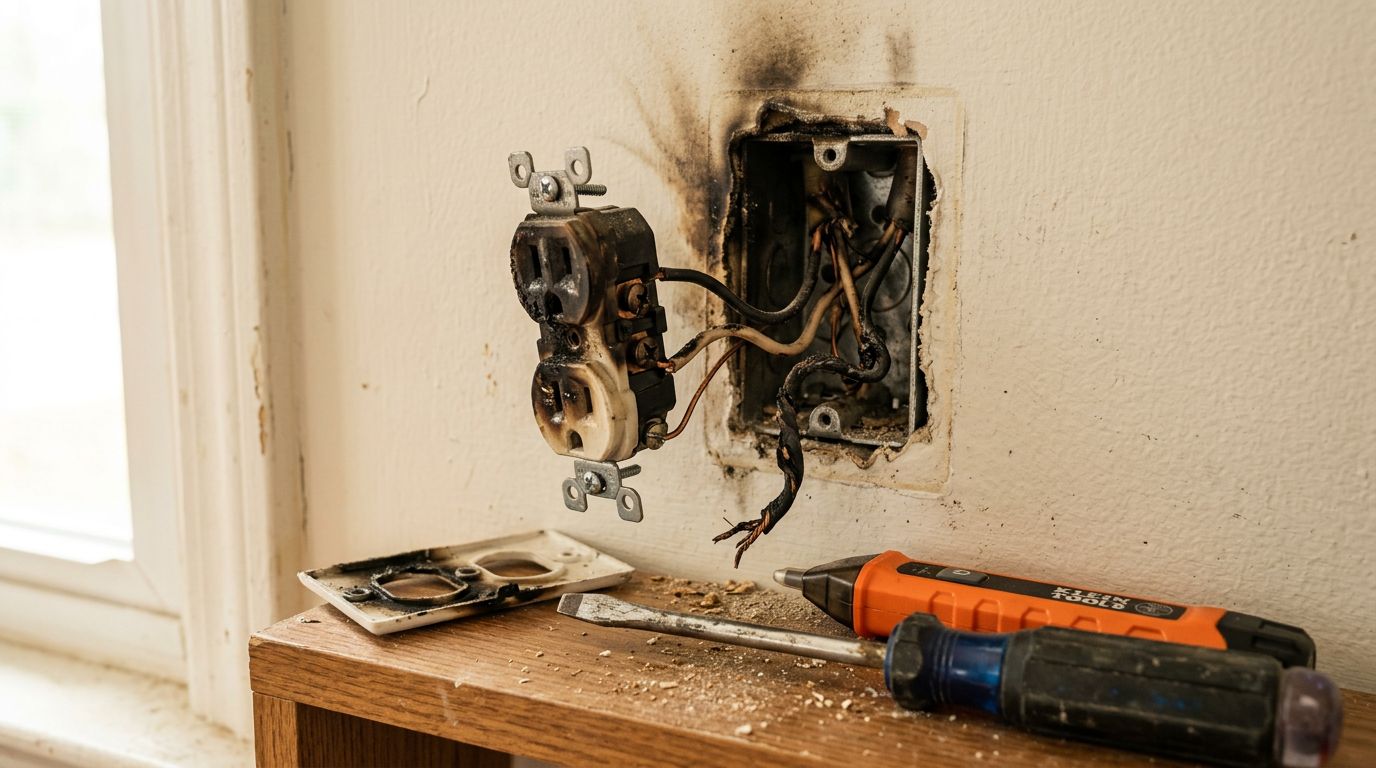
- Test the outlet. Plug in a lamp or phone charger you know works. If nothing happens, the outlet may have a real issue.
- Check the breaker. Go to your panel and look for a tripped breaker. Reset it and test again.
- Reset any GFCI outlets. Press the reset button on GFCI outlets nearby. One tripped GFCI can shut down several outlets.
- Look for physical damage. Cracks, discoloration, or a loose faceplate suggest the outlet needs replacing.
- Feel for heat. A warm outlet is a red flag. Warm outlets should be replaced, not just repaired.
- Test how well plugs hold. If a plug falls out easily, the internal contacts are worn and the outlet should be replaced.
How to Repair a Faulty Outlet Safely
If you are comfortable with basic home tasks, a few outlet problems are simple to handle. But safety comes FIRST. Electricity is not something to rush. Always cut the power before you touch any wiring, and if anything feels beyond your skill level, stop and call a professional. Here is a general approach that homeowners often follow.
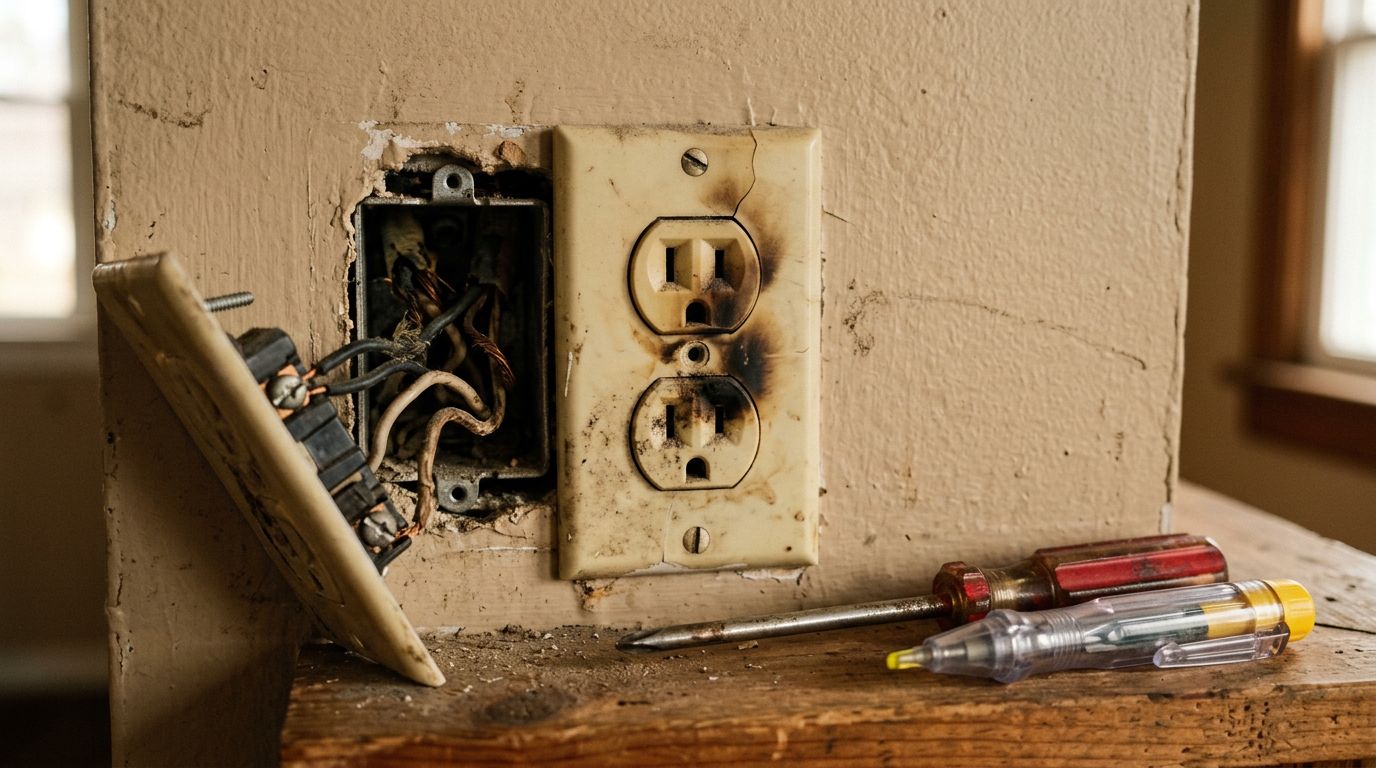
- Turn off the power. Head to your breaker panel and switch off the circuit that feeds the outlet.
- Confirm the power is off. Use a voltage tester on the outlet to make sure no current is present.
- Remove the faceplate. Unscrew the cover so you can see the outlet.
- Pull out the outlet. Loosen the mounting screws and gently ease the outlet from the box.
- Inspect the wiring. Look for loose, burned, or frayed wires. Tighten any loose connections.
- Replace if needed. If the outlet is damaged, swap it with a new one that matches the wiring setup.
- Reassemble and test. Put everything back, restore power, and test the outlet again.
If you ever feel unsure, it is always safer to bring in a pro. Our team offers reliable outlet repair in Plano, TX and the surrounding area for homeowners who want the job done right.
When to Call a Licensed Electrician for Outlet Problems
Some outlet issues are DIY friendly. Others are warning signs of something serious. Here are the situations where you should stop and call in a licensed electrician right away.
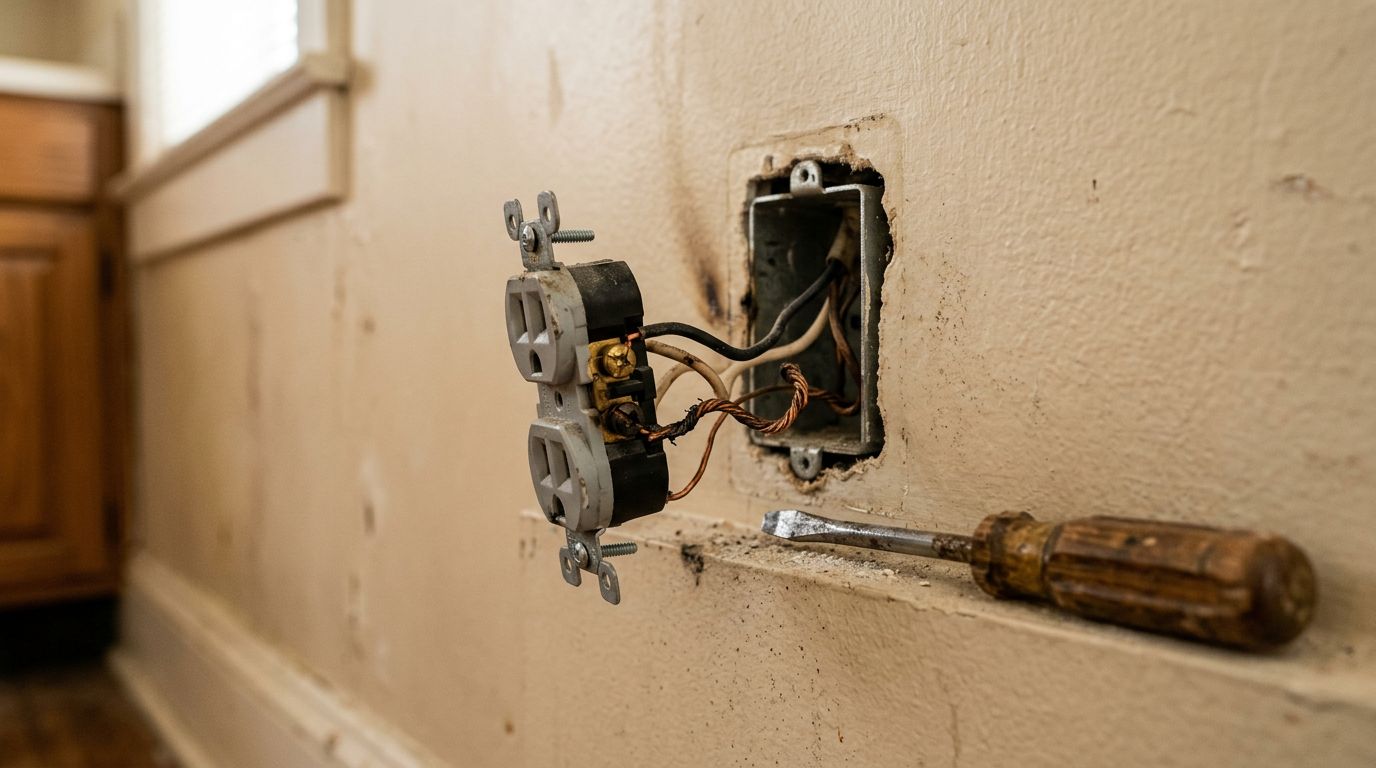
You See Burn Marks or Smell Something Burning
Scorch marks, melting, or a burning smell mean the outlet has overheated. This is a fire risk. Do not use that outlet and get a professional out fast.
The Outlet Sparks or Shocks You
A tiny spark when you plug something in can be normal. But large sparks, repeated sparking, or a shock when you touch a plug are NOT normal. These point to dangerous wiring problems.
Multiple Outlets Stop Working
When several outlets go dead at once, the issue is usually in the wiring or the circuit, not the outlet itself. This calls for a trained eye.
Your Outlets Feel Warm or Hot
Heat means excess current or a bad connection. A hot outlet can quickly turn into a hazard, so let a pro inspect it.
You Have Old Two-Prong Outlets
Older homes often have ungrounded two-prong outlets. Upgrading these safely requires an electrician who understands local code.
Electrical Outlet Safety Tips to Prevent Future Failures
The best repair is the one you never need. A few smart habits go a long way toward keeping your outlets healthy and your home safe. We share these tips with our customers across McKinney, Frisco, Plano, and beyond because prevention really does pay off. Small steps today can save you from bigger headaches later.
- Do not overload outlets. Avoid stacking multiple high-power devices into one outlet or power strip.
- Use surge protectors. They guard your electronics against sudden voltage spikes.
- Replace loose outlets. If a plug will not stay put, swap the outlet before it becomes a hazard.
- Install GFCI outlets in wet areas. Kitchens, bathrooms, and outdoor spots need this extra protection.
- Keep water away. Never use outlets with wet hands or near standing water.
- Test outlets regularly. Press the test and reset buttons on GFCI outlets every month.
- Schedule inspections. A periodic home electrical inspection catches hidden problems early.
How Much Does Outlet Repair Cost
Cost is always a question, and the honest answer is that it depends. A simple fix like resetting a GFCI or tightening a wire is cheap or even free if you do it yourself. Replacing an outlet or dealing with deeper wiring issues costs more. The final price is shaped by several factors, and we always aim to give clear, upfront pricing before any work begins.
- Type of repair. A basic outlet swap costs less than rewiring or panel work.
- Outlet type. Standard outlets are cheaper than GFCI, USB, or smart outlets.
- Accessibility. Outlets that are hard to reach may take more labor time.
- Wiring condition. Old or damaged wiring can add to the scope of the job.
- Number of outlets. Fixing several at once may change the overall cost.
- Code upgrades. Bringing older outlets up to current safety standards adds to the total.
For an accurate number, it helps to have a professional look at the specific situation. Every home is a little different, and a quick assessment gives you a solid estimate.
Conclusion
Outlets fail for all kinds of reasons, from worn contacts and loose wiring to overloaded circuits and simple age. The good news is that many problems are easy to catch if you know what to watch for. A dead outlet may just need a reset, while a warm or sparking one needs quick attention from a pro. Safety should always guide your decisions.
If your outlets are acting up and you would rather leave it to experienced hands, the team at Sawyers Electric proudly serves McKinney, Frisco, Plano, Allen, Richardson, The Colony, Carrollton, Lewisville, and Garland. Reach out to us today and let us help keep your home powered and SAFE.